
Systems
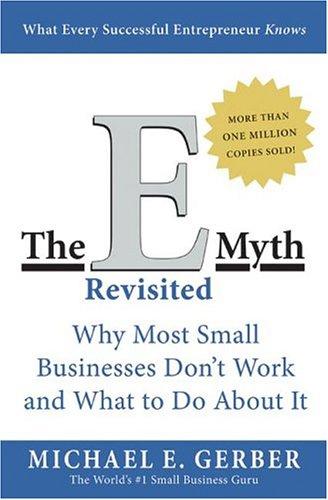
The E-Myth Revisited
Michael E. Gerber
Why most small businesses fail — and how systems save them.
Recommended for: My Payroll Costs Are Too High
Employees
Understand the true cost of labor, protect cash flow, and build a payroll system you can afford without treating people unfairly.
Payroll is more than hourly wages or salaries. The full cost can include employer taxes, workers’ compensation, insurance, benefits, paid time off, overtime, payroll service fees, training, uniforms, vehicles, tools, unproductive time, and mistakes or rework. The goal is not simply to cut people. It is to know the true labor cost, price work correctly, schedule responsibly, improve productivity, and pay workers fairly and on time.
Calculate one honest payroll number for the last pay period: wages plus employer taxes, insurance, benefits, overtime, and payroll fees.
Compare that total with collected revenue and gross profit for the same period.
Review overtime and unproductive hours with the team; correct one scheduling or preparation problem this week.
Confirm that upcoming cash is sufficient for payroll and payroll taxes before making other discretionary payments.
Calculate the fully burdened hourly cost for each role or crew, not just the wage.
Track every paid hour to a job, customer, department, or clearly named non-billable category.
Compare estimated labor hours with actual hours after every job and update future estimates.
Set a weekly payroll dashboard showing payroll dollars, payroll percentage of collected revenue, overtime, billable utilization, gross profit, and cash needed for the next two payrolls.
Create written rules for time entry, overtime approval, scheduling, job preparation, and payroll review.
Improve the process causing wasted labor before reducing people or pay.
Review staffing only after measuring demand, capacity, productivity, cash flow, and legal obligations.
Have a qualified payroll, accounting, insurance, or employment professional review classifications and compliance questions.
Consider a payroll service like ADP, Paychex, Gusto, or QuickBooks Payroll. PROS: they calculate and file your payroll taxes for you, handle quarterly and year-end reports (W-2s, 940s, 941s), run audits and keep you compliant, many offer pay-as-you-go workers' compensation bundled with payroll so you pay premiums based on actual wages instead of a big upfront deposit, direct deposit and employee self-service save you hours, and using your own account keeps your payroll history in one place. CONS: monthly fees plus per-employee charges add up as you grow, you are still legally responsible if they make a mistake, customer service can be slow when you have a problem, contracts and add-on fees can hide costs, and it does not fix the real issue if your prices do not cover your true labor cost. A payroll service handles the paperwork — it does not make payroll affordable.
Quick Win
Do this today
Before the next payroll closes, calculate its complete cost and identify the single largest source of overtime, waiting, rework, or unpriced labor.
Build the System
Next 30 days
Build a weekly payroll control system: daily time entry by job, overtime approval, labor estimate versus actual review, a two-payroll cash forecast, and one owner responsible for reviewing the numbers.
Long-Term Transformation
Where you're headed
Create a healthy labor model where prices cover the full cost of the team, schedules reduce waste, cash reserves protect payroll, employees are paid accurately and on time, and hiring follows proven demand.
From Profit First
Treat payroll as a planned allocation supported by real cash, not a surprise paid from whatever remains. Protect payroll and tax obligations before discretionary spending.
Framework: Allocate first: Profit, Owner Pay, Taxes, Operating Expenses.
From Traction
Put one person in charge of payroll accuracy and labor performance, then review a small weekly scorecard instead of waiting for month-end financial statements.
Framework: Vision · People · Data · Issues · Process · Traction
From The E-Myth Revisited
Document timekeeping, scheduling, job preparation, and payroll review so the result does not depend on memory or one employee.
Framework: Technician (does the work) · Manager (creates order) · Entrepreneur (builds the future)
Pass It On Action
Help another owner calculate one employee’s true hourly cost, including taxes, insurance, benefits, paid time, and overhead—not just the wage.
Sign in to check off steps and save progress to My Growth Plan. Sign in
Week 1 — Diagnose
Week 2 — Build
Week 3 — Implement
Week 4 — Measure & Improve
Wisdom for the journey — encouraging stewardship, integrity, and service, never a promise of guaranteed success.
#51 · Employees
Pay workers fairly
Luke 10:7
#52 · Employees
Pay people on time
Deuteronomy 24:14–15
#54 · Employees
Treat employees with dignity
Colossians 4:1
#60 · Employees
Reward faithfulness
1 Timothy 5:18
#78 · Growth
Prepare your systems before rapid expansion
Proverbs 24:27
#92 · Wisdom
Commit your plans to God
Proverbs 16:3
Approved Bookshelf resources related to this challenge.
Michael E. Gerber
Why most small businesses fail — and how systems save them.
Recommended for: My Payroll Costs Are Too High

Mike Michalowicz
A simple discipline for cash flow and actually keeping profit.
Recommended for: My Payroll Costs Are Too High

Gino Wickman
A practical operating system for growing past the owner's limits.
Recommended for: My Payroll Costs Are Too High
Pass It On may earn a commission when you purchase through certain links on this site, at no additional cost to you. These commissions help support the mission and programs of Pass It On. Read the full disclosure.
Tell us what you are facing, what you have tried, and what outcome you want.
Sign In to Ask for HelpReal lessons from Pass It On members, shared after administrator review.
No member stories yet for this challenge — yours could be the first.
Protect confidential information: no customer names, employee details, addresses, pricing, contracts, or financial records.
Sign In to ShareYou don't have to build alone.
Challenge → Diagnose → Prioritize → Learn → Take Action → Measure → Improve → Help Someone Else
Learn it. Apply it. Pass it on.
Stronger People. Stronger Businesses. Stronger Communities.