Systems
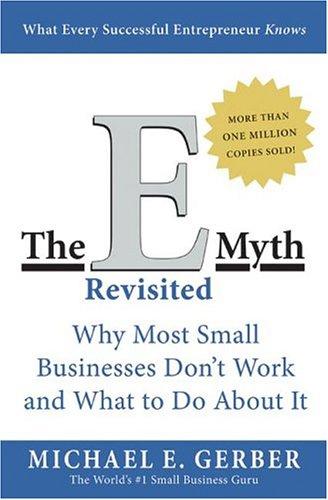
The E-Myth Revisited
Michael E. Gerber
Why most small businesses fail — and how systems save them.
Recommended for: Too Many Tools, No Real System
Systems
You use Podio, QuickBooks, GPS for the vans, drones, ChatGPT for proposals and more — but nothing is connected and you are not sure what to keep.
Turn a pile of disconnected tools into one simple system: know what each tool is for, keep only what earns its place, and connect the work so information stops falling through the cracks.
Write down every tool you use, what it costs, and what job it is supposed to do.
Circle the three tools that run the business day to day — those are the core.
Pick one repeated task (like proposals) and document how it should flow from start to finish.
List every tool and its job, then mark each one: keep, combine, or cancel.
Choose one "home base" tool where the customer and job information lives, and make everything else feed into it.
Write a simple step-by-step process for your most repeated work (estimate, proposal, schedule, invoice).
Set a weekly 30-minute review to check the system is being used and fix what is not.
Share what worked with another owner so they can skip the trial and error.
Quick Win
Do this today
List every tool you use on one page with its monthly cost — cancel or pause one you have not opened in 60 days.
Build the System
Next 30 days
Build one simple weekly rhythm: every Friday, review jobs, money, and schedule in your core tools so nothing hides.
Long-Term Transformation
Where you're headed
A connected, documented system where each tool has one clear job, the team knows the process, and the business runs the same way whether you are there or not.
From The E-Myth Revisited
Work ON the business, not just IN it — document the system so the business does not depend on you remembering everything.
Framework: Technician (does the work) · Manager (creates order) · Entrepreneur (builds the future)
From Traction
Simple tools used consistently beat complex tools used occasionally — pick your core processes and run them the same way every week.
Framework: Vision · People · Data · Issues · Process · Traction
From Atomic Habits
You do not rise to the level of your tools; you fall to the level of your systems — small consistent habits make any tool actually work.
Framework: Small habits → Big results
Pass It On Action
Show one fellow owner your tool list and how you decided what to keep — your trial and error can save them months.
Sign in to check off steps and save progress to My Growth Plan. Sign in
Week 1 — Diagnose
Week 2 — Build
Week 3 — Implement
Week 4 — Measure & Improve
Wisdom for the journey — encouraging stewardship, integrity, and service, never a promise of guaranteed success.
#13 · Work
Diligence creates opportunity
Proverbs 12:24
#78 · Growth
Prepare your systems before rapid expansion
Proverbs 24:27
#92 · Wisdom
Commit your plans to God
Proverbs 16:3
Approved Bookshelf resources related to this challenge.
Michael E. Gerber
Why most small businesses fail — and how systems save them.
Recommended for: Too Many Tools, No Real System

Gino Wickman
A practical operating system for growing past the owner's limits.
Recommended for: Too Many Tools, No Real System

James Clear
Small, consistent disciplines — the engine behind Do It.
Recommended for: Too Many Tools, No Real System
Pass It On may earn a commission when you purchase through certain links on this site, at no additional cost to you. These commissions help support the mission and programs of Pass It On. Read the full disclosure.
Tell us what you are facing, what you have tried, and what outcome you want.
Sign In to Ask for HelpReal lessons from Pass It On members, shared after administrator review.
No member stories yet for this challenge — yours could be the first.
Protect confidential information: no customer names, employee details, addresses, pricing, contracts, or financial records.
Sign In to ShareYou don't have to build alone.
Challenge → Diagnose → Prioritize → Learn → Take Action → Measure → Improve → Help Someone Else
Learn it. Apply it. Pass it on.
Stronger People. Stronger Businesses. Stronger Communities.